Use Cases
A shared cockpit for organizational intelligence
A growing team can bring shared knowledge, specialist AI Twins, reporting and current work into one governed environment, without replacing the systems it already trusts.
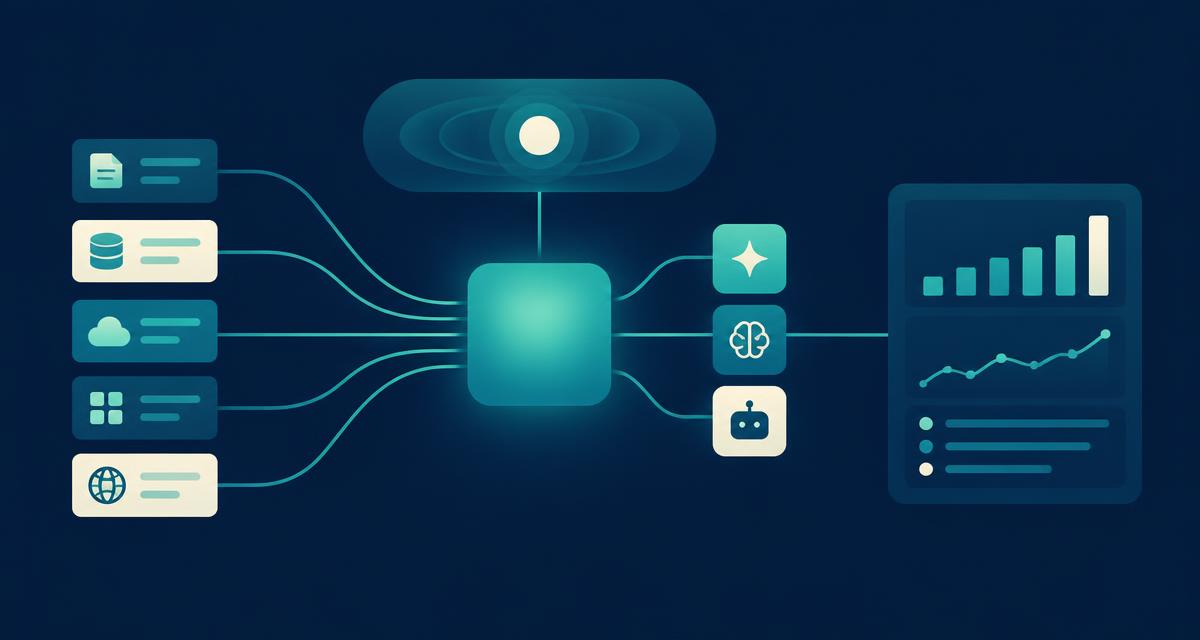
Growing organizations rarely have an information shortage. They have a coordination problem.
Current figures live in operating systems. Plans and policies live in documents. Decisions are made in meetings and messages. Important context remains with the people closest to the work. A leader may only see the whole picture after asking several people to assemble it.
A shared organizational intelligence cockpit gives the team one governed place to ask questions, review what has changed and reach the right expertise.
The cockpit
The model has four connected parts.
- A core owned by the organization holds approved documents, definitions, permissions, source references and connection rules. Existing operational systems remain authoritative for the records they own.
- A shared Space gives a team, project or leadership group one working environment for discussion, documents and decisions.
- Community AI answers from approved shared materials and the open discussion in that Space. It represents the group's collective working knowledge rather than one person.
- AI Twins make a leader's or specialist's approved knowledge available within a defined scope. Each Twin retains its own sources, instructions, boundaries and human owner.
Dashboards and scheduled briefings can sit alongside these conversational interfaces, bringing selected metrics, changes and exceptions into the same operating context.
What the team can ask
- What changed this week?
- Which version of this policy is current?
- What did we decide about this project?
- How does our specialist normally explain this issue?
- What requires a person's attention?
Start with visibility, not autonomy
The first version does not need to automate the organization. It can begin by answering questions, summarizing activity, drafting responses and escalating exceptions. It should not send external communications, place orders, modify records or make consequential decisions unless those actions are separately approved and tested.
Before connecting a source, the team establishes who owns it, what information is reliable, how current it needs to be and who may access it. Before adding an AI Twin, the owner approves its material, scope and escalation rules.
A staged path
A practical rollout can proceed in four stages.
- Map the current environment. Identify systems, documents, recurring questions, sources of truth and decisions that still depend on individual memory.
- Build one contained prototype. Start with one Space, a selected source library, Community AI and one or two relevant AI Twins.
- Validate with a small group. Review answers, citations, refusals and escalation behavior before expanding access.
- Add only what proves useful. Introduce dashboards, briefings, additional Twins, connections or automation when the team understands the value and trusts the boundaries.
What remains with the organization
The organization should retain control of its documents, knowledge, permissions, source definitions and operating configuration. Any implementation partner receives limited and revocable access to the agreed work.
That creates continuity even if applications, AI models or suppliers change. The systems of record remain in place, while the organizational core preserves the context needed to use them consistently.
The objective is not to put AI everywhere. It is to make approved knowledge easier to reach, keep specialist expertise inside clear boundaries and help leaders see what matters without becoming the organization's manual routing layer.
Questions and answers
- Does a shared cockpit replace our existing systems?
- No. Existing operational systems remain authoritative for the records they own. The cockpit gives the team one governed place to ask questions about them.
- What should the first version do?
- Answer questions, summarize activity, draft responses and escalate exceptions. It should not send external communications, modify records or make consequential decisions unless those actions are separately approved and tested.
- Who controls the knowledge?
- The organization keeps control of its documents, permissions, source definitions and configuration. Any implementation partner receives limited and revocable access to the agreed work.
AI Twin produces answers generated by AI. Important decisions should still be verified against the cited sources or with the expert directly.